 This week marks the 49th anniversary of the first steps on the moon. I have a vested interest in the event having grown up in Wapakoneta, Ohio – home of Neil Armstrong. And I also count myself fortunate that the Armstrongs were family friends – so in spite of the fact that I was only 6 years old, I vividly remember being at Neil’s parents’ house for his homecoming party after the Apollo 11 mission.
Apollo 11 launched July 16, 1969 with mission commander Neil Armstrong, lunar module pilot Buzz Aldrin and command module pilot Michael Collins on board. It was the second space flight for each of the astronauts with each having their inaugural flights in the Gemini program. The official call signs for the modules of Apollo 11 were Columbia for the command module and Eagle for the lunar lander.
The mission went fairly smoothly on the flight out to the moon – and then came the lunar landing on July 20th. The computers on the Eagle famously overloaded which lead to Armstrong taking the controls for a manual landing with only seconds of fuel to spare before the mission would have needed to be aborted. The mission schedule called for a 4 hour sleep period after the landing but thinking that the landing excitement would have kept them from sleeping, Armstrong and Aldrin immediately began preparations for their walk on the moon.
 On his way down the 9 rung lunar module ladder, Armstrong deployed a remote TV camera allowing the world to see the grainy video of “one small step for (a) man, one giant leap for mankind.” About 20 minutes later, Aldrin joined Armstrong on the moon’s surface and they began their mission to gather moon rock and soil samples, set up a seismographic device and set up a retroreflector device that would allow precise measurement of the distance between the earth and the moon. After an hour and a half on the moon’s surface – which incidentally also included a phone call from President Nixon – Aldrin returned to the lunar module followed by Armstrong about 40 minutes later.
In all, Armstrong and Aldrin spent 21 hours and 36 minutes on the moon’s surface before the Eagle blasted off to rejoin Collins and Columbia for the trip back to Earth. Spashdown came on July 24th in the Pacific Ocean.
Want to know more about Apollo 11? Check out these sites:
And because it’s in my hometown – also check out the Neil Armstrong Air & Space Museum website.
Can’t wait to go home for the 50th Anniversary Moon Festival in Wapakoneta next year!
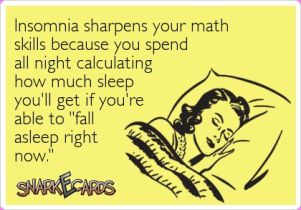 Most sleep experts define insomnia as difficulty falling or staying asleep with the type based on its frequency/duration. We’ve probably all experienced acute insomnia which is characterized as brief and generally caused by life circumstances/stress. Acute insomnia generally resolves on its own without medical intervention. I’m diagnosing myself with this type of insomnia – and I’m guessing I’ll have no trouble sleeping tonight after I get home from the gym.
 Now that the 4th of July is in the rear view mirror, it’s time to take summer seriously. So I’m putting together a list of things that are summer staples – things you should definitely do before the summer slips by and is over. Here goes:
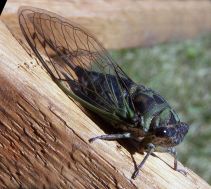 Cicada are from the superfamily Cicadoidea of the insect world – are part of the Hemiptera order or true bugs. They closely related to aphids and bed bugs (EW!). Cicadas have prominent eyes, short antennae and transparent wings. Typically, they live in trees and feed on watery sap. There are annual species of cicada that emerge every year and there are periodic species that spend most of their lives as larvae underground and only emerge every 13 or 17 years.
 Locusts are a type of grasshopper from the insect order of Acrididae and they’re most memorable for their voracious appetites and swarming behavior. Remember the plague of locusts from the Bible story of Moses? Typical locusts. In adulthood, they move in swarms of millions or even billions of insects – but fortunately for us here in North America, there are no species of swarming locusts located here.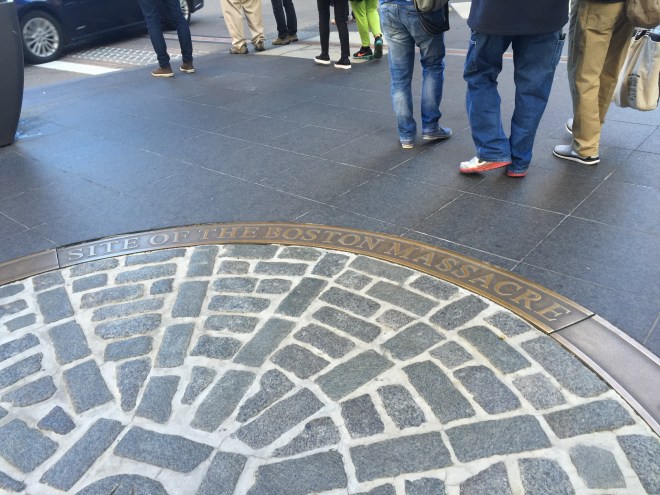


 Happy 4th of July! Today we commemorate the signing of the Declaration of Independence – but that bit of history is just a little bit wrong. The text of the Declaration was ratified by the Second Continental Congress on July 4th – but there was no actual signing ceremony held. In fact, before it was released to the printer for publication, it may have only had 1 signature attached – John Hancock’s as president of the Second Continental Congress. The initial printing of the Declaration numbered about 200 copies by a man named John Dunlap. Those first copies were called Dunlap’s broadside and were distributed/copied throughout the colonies. Today, only 26 of the original Dunlap broadsides still exist.
 Learn Or Do