New Mammogram Regulation

Yesterday, it was all over the news that healthcare providers will soon be required to notify women whether or not they have dense breast tissue when they perform a mammogram. Why is this important?

First let’s talk about breast tissue in general. Overall, there are three different types of breast tissue:

  • Glandular. This is the tissue and ducts responsible for producing milk.
  • Connective. This is fibrous tissue that keeps ducts and glands in place.
  • Fatty. Yes – we carry fat in our breasts.

If you have a lot of glandular and connective tissue and not a lot of fatty tissue, you are considered to have dense breast tissue. But the tricky thing is that no matter what you weigh or what cup size you are, only a mammogram can determine just how dense your breast tissue is.

About half of all childbearing age women have dense breast tissue – but it changes over time. As you age, your breast tissue generally gets less dense due to estrogen levels falling off. So again – the question is – why do you need to know if you have dense breast tissue?

The two big reasons you need to know about your breast tissue are that high density has been linked to increased chances for breast cancer and the density can make finding breast cancer early harder because cancer and the fibers in your breast both show white on a mammogram.
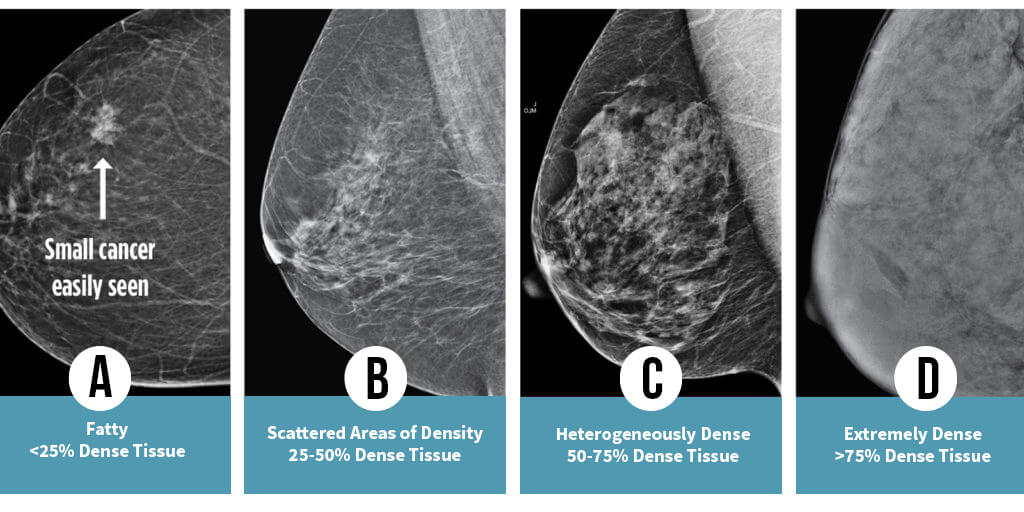
Examples of types of breast tissue density – you can see how cancer could easily be hidden as the tissue density increases.

My mom died of cancer that started as breast cancer so statistically, I’m at a higher risk of getting breast cancer. As a result, I’ve always been very good about getting my screenings regularly. Before I went through menopause, my breast tissue was very dense and the routine for me went something like this: go get a mammogram, get a call from my doctor telling me that the mammogram was inconclusive and they’d like me to come in for an ultrasound, go in for the ultrasound, results were negative for breast cancer. I always wanted to cut to the chase and just get the ultrasound, but that’s not protocol!

Because of my mother’s history and the fact that a lot of my family is in the healthcare profession, I knew to ask questions and find out about the implications around the density of my tissue. I’ve also been blessed with having really good OBGYNs over the course of my life who have taken the time to educate me. I’m REALLY glad that more women will be getting this kind of information so they can make the best choices for their health.

Want to learn more? Check out these links:

Embarrassment

My health question today is – can you literally die of embarrassment? I did something epically dumb this morning that may cost me a new job. I confused a no email for a role at a company for a role where I am 2 rounds of interviews deep in the process with final interviews pending. A role that I have been pursuing for 11 weeks and think I could be a rock star in. And of course the person who has been my contact and could potentially be my boss is the one who pointed my error out to me. In my defense, the role titles and req numbers are very similar – I just didn’t check my job application spreadsheet before I leaped into disappointment. I would like to die of embarrassment this morning,

So I asked Chat GPT if you can die of embarrassment. The odds are low, but yes you can. Here’s what I got:

Yes, in rare cases, embarrassment can be fatal. For example, in 1860, a housemaid who was caught stealing food from a larder died suddenly after the incident, and doctors were unable to determine the cause. However, it’s likely that a sudden rush of adrenaline, similar to the one that occurs during stressful situations, was a factor. Another way to die from embarrassment indirectly is by not reporting a medical condition until it’s too late. For example, some people may be embarrassed about getting a colonoscopy, which can cause discomfort, but almost all patients don’t remember the procedure. 

Embarrassment can also trigger self-destructive behaviors and suicidal thoughts and actions. Men may be especially vulnerable if they are confronted with evidence that they aren’t as smart, powerful, or brave as they think they should be. 

Here are some tips for coping with embarrassment: 

  • Practice self-compassion 
  • Stay calm and take a deep breath 
  • Laugh it off 
  • Confront the situation 
  • Learn from it 
  • Treat yourself with grace and compassion 
  • Acknowledge what really happened and own the situation or mistake 
  • Spotlight levity 
  • Remember that you are not alone 
  • Distract yourself 

I’ve definitely learned something from this. I need to learn to curb my tendency leap into disappointment during this job search. I’m trying to treat myself with grace and compassion – hope my potential new boss will too.

Oak Leaf Mites?!

Turns out, what I thought was a patch of eczema last week, may actually have been an Oak Leaf Mite bite! What’s that you say? Well, I had never heard of them either but it seems that our giant cicada invasion this summer brought with it a surplus of Oak Leaf Mites.

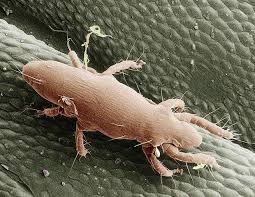
Oak Leaf Mites – also known by their Latin name Pyemotes herfsi – are a tiny European mite species. Tiny? Barely visible to the naked eye at an average length of 0.2mm, the Oak Leaf mite is redish brown with a shiny exoskeleton. And because they are so tiny, you won’t just find them around oak trees – they easily blow around with the wind so you can get a bite even if you haven’t been close to an oak tree or even if you never go outside since they fit through the openings in window screens! Unlike other biting pests, DEET has mixed effectiveness for these mites so managing them is difficult.

Why do we have so many of them this year? Well, they LOVE to feast on other insects – and it turns out that the nests of 17 year cicadas that we had earlier this summer were just full of these mites. Yay? The good news is that by the end of this month, their lifecycle will come to a close and we can go back to our normal range of biting pests.

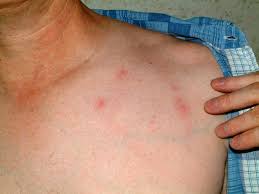
What does an Oak Leaf Mite bite look like? The bite generally presents like a pimple at the center of a red, irritated area – and it itches like crazy!

How to deal with a bite if you get one? In my case, the treatments I use for eczema were pretty effective. Hydrocortisone or calamine cream/lotions help a lot. I also slathered mine with Aveeno Eczema Therapy cream – the ceramides and colloidal oatmeal in that also help with the itch. I’m 2 weeks in with my bites and they are finally starting to calm down but it has been annoying. I’m definitely going to be glad when the bites – and the mites – are gone!

Want to learn more about the Oak Leaf Mite? Here are some resources:

SO itchy!!!!

Ever had a spot of eczema? MAN does it itch! I thought at first it was an insect bite, but we’re into week 2 with it and it’s still going. Luckily, I have some cream given to me by my dermatologist from the last spot, but I may need to go see him again for more.

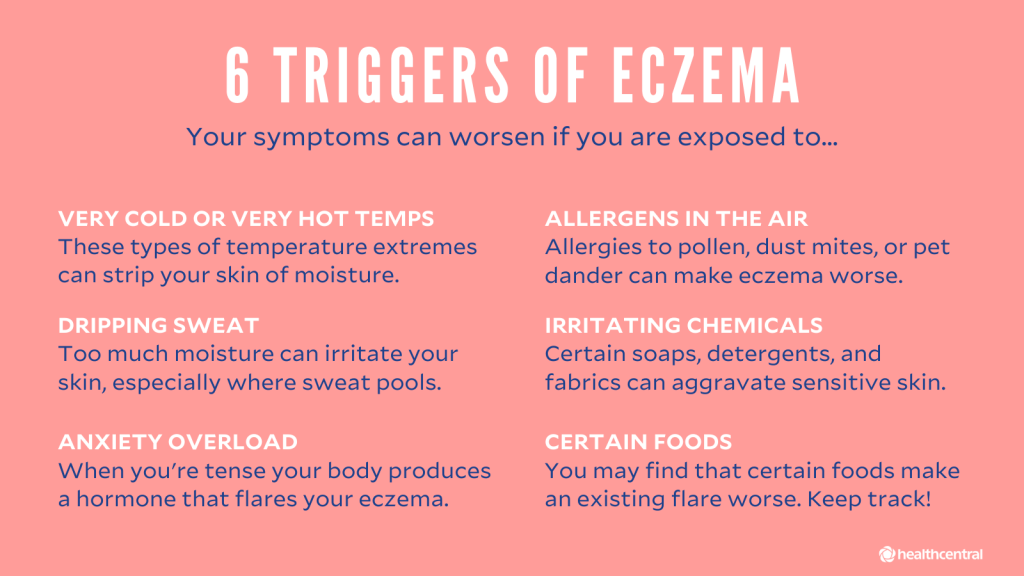
In the meantime – what is eczema? Basically, it’s a common skin condition causing patches of dry, itchy skin. This link will give you a great overview of they types, causes and treatments:

https://my.clevelandclinic.org/health/diseases/9998-eczema

I had an encounter with bed bugs in a 5 star hotel at Universal Theme Park in Florida over 10 years ago – and ever since, I have weird reactions to bug bites. And sometimes that triggers eczema for me. It got me good this time – so pardon me while I run to Walgreens to pick up some Aveeno cream to help tide me over until my dermatologist can see me!

Gut Health

I think I may have written about the stomach bug that hit my friend and I while we were in Italy – and I seem to have a recurrence going on. So I started taking probiotics and I’ve been reading up on gut health.

Gut health seems to make the news fairly regularly these days, but if you don’t know it refers to the balance of bacteria, viruses, and fungi, known as the microbiome in your digestive system. Studies have shown that when the balance gets off, it can lead to things like constipation, diarrhea, bloating, gas, abdominal pain, acid reflux, headaches, poor sleep, and even joint pain. So keeping that balance is good for your overall health!

Lots of things can contribute to poor gut health – starting with too little sleep and other bad habits like smoking and excessive alcohol consumption. Antibiotics can also be a factor – so if you’ve been prescribed medication for any sort of infection from conditions like acne to sinus issues, the odds are you could get a stomach upset with it (which is why you are told to take the medication with food to try to mitigate that). But diet is definitely the biggest driving factor. Eating too much processed food, sugar, saturated fats, and additives/preservatives will definitely drive up the bad bacteria in your gut.

So how do you get your microbiome back into balance? It all goes back to a healthier lifestyle:

  • Eat less processed food, more fiber, more fresh fruits and vegetables and limit sugary foods. Whole grains and fermented foods like sauerkraut and kimchi are particularly helpful.
  • Take a probiotic supplement. There are lots of them available – like Align or Olly Probiotic gummies. You can also find yogurt with probiotics – try Activia or greek yogurt. You can tell if your favorite yogurt has probiotics by reading the label – you want one that says “live yogurt cultures” or even better “lactobacillus acidophilus.” Need to sneak the probiotic into your diet? You can substitute sour cream with one of the healthy plain yogurts – you won’t notice a difference in flavor and you get the bonus of those cultures!
  • Exercise more! You don’t need even need a gym – you can just walk more. Maybe throw in some weight bearing exercises like squats and lunges. Hit those 10,000 steps a day – but if you can’t do that, try to increase your daily steps every day any way you can. Park farther away from the store or walk around the block. You can work up to the 10,000 steps easily. Need something more fun? Try dancing to 2-3 songs at least once a day! Just get moving! Bonus – it will help relieve stress which also contributes to poor gut health.
  • HYDRATE! Drinking adequate amounts of water helps your overall health in a lot of ways but will contribute to better gut health as well. But remember – boosting your consumption of coffee, tea and soda doesn’t count. Caffeine is a diuretic so drinking it actually takes water out of your system.
  • Get on a good sleep schedule. Planning for 7-8 hours of sleep per night can help get your system sorted out. So put those devices down about an hour before you want to sleep and develop a routine that allows you to get the rest your body needs.

Want more info about your gut health? Check out these links to get started!

Hydrate!

Are you carrying around a ridiculously huge Stanley cup? Do you have a timer for your water consumption? Do you even know how much water you drink in a day? When it’s hot, everyone keeps saying to make sure you stay hydrated. But what does that really mean?

Hydration is all about making sure you replace the fluids your body loses through sweating, breathing and waste elimination (I’m being delicate!). On average, our bodies lose between 2-3 quarts of fluid every day and it’s important – especially when you’re sweating more than normal – to keep up with that fluid loss.

What happens if you get dehydrated? You might just feel thirsty – but symptoms can escalate quickly and include dizziness, tiredness, headache, muscle cramps, rapid breathing, rapid heart rate and even fainting. When you get to rapid breathing, rapid heart rate or fainting, it’s time for immediate medical help.

If you have the less severe symptoms of dehydration, you can just move to shade/cool room to rest and drink water slowly – think by regular sips. Suck on ice chips or popsicles. But by all means – DON’T drink caffeinated or alcholic drinks that can only dehydrate you more.

Here are some great links where you can learn more about hydration so you don’t end up dried up!

Covid is back???

President Biden came down with it – again. His third go-around with Covid. And 5 members of the Austrailian women’s water polo team have tested positive for it. The stinking virus just won’t go away will it? According to a report by Newsweek yesterday, Covid has “very high” rates in 17 US states.

I feel like I have been really lucky – I still haven’t caught Covid. Of course, being vaccinated, living alone and having good cleaning/hygiene habits probably has a great deal to do with that.

I have a love/hate relationship with the vaccine. I was giddy with excitement to get my first shot because it meant the end of all the isolation was near. But I am one of those people that reacts violently to the shot – fever, chills, headache, body aches for a good 24 hours after every shot. And I get it – a little misery might save me from a LOT of misery if I actually caught the virus. I have had 3 vaccines so far but now I find myself being reluctant to continue getting the shots because of the reaction.

As the virus continues to mutate, everything I’ve read says that the symptoms are much more mild now and tends to stay in the upper respiratory tract rather than going deep into the lungs like the initial infections in 2019/2020.

It’s still a good idea to self quarantine and wear a mask if you have it – you never know who you might come into contact with who might be immunocompromised. And nobody wants to make someone else sick RIGHT?

Reporting on numbers of people with Covid has gotten a little dicy with the advent of home testing kits and the less mild versions of the virus. But everyone from the CDC to county health departments are reporting a surge in cases this summer.

This article has a lot of good info about the current surge in cases: https://www.statnews.com/2024/07/18/latest-covid-spike-update-new-variants-fewer-novids/

So let’s continue to be careful OK? Wash your hands, avoid people who are sick, keep up healthy habits and increase your chances of making it through this summer wave of Covid unscathed!

Intermittent Fasting

I’ve been reading a lot about intermittent fasting and how it can help with weight loss as well as gut health. There are three basic types of fasting:

  1. Time restricted eating. The model I have read most about is eating during an 8 hour window of the day (i.e. 10AM to 6PM) and fasting the remaining 16 hours. There are all kinds of variations on this but all of them require a fasting window of time longer than the eating window.
  2. Fasting by day. This means eating normally a specific number of consecutive days/week and fasting or severely restricting food intake on the remaining consecutive days. The most common plan I’ve found for this is to eat normally for 5 days and then fast or eat limited amounts of food the other 2 days of the week. I personally think this would be hard – I get cranky when I’m hungry!
  3. Eat – stop – eat model. This model says you can eat normally but pick 1 or 2 days of the week to completely fast.

I’m most interested in trying the first kind of intermittent fasting. Given that my normal sleep pattern is 6-7 hours/night, it should be pretty easy to manage fasting 12 or more hours a day. Are you interested in giving this a try? Here are some links to give you more info:

Itchy?

The mosquitoes are out with a vengeance. And while I’m not particularly worried about weird fevers or anything, the itching might make me crazy. More than 10 years ago, I stayed at a hotel at Universal theme park in Orlando and got bit by bed bugs – and ever since, I have horrible, swollen reactions to mosquito bites so I feel like an expert on itching. So let’s talk about some ways to make the bites stop being so itchy:

  • My favorite is hydrocortisone cream. It’s a corticosteroid that mimics how a natural hormone reduces inflammation. So it stops the itch and helps reduce the swelling around the bite too. I carry a tube of Aveeno 1% Hydrocortisone cream around with me almost every summer. It also has aloe and vitamin E in it so it’s good for your skin!
  • Old school? Calamine lotion will take the itch away! And give you pink polka dots to remind you of being a kid?
  • Washing the bite with antibacterial soap and cool water can help – but it’s never worked very well for me.
  • Ice it! Putting an ice cube or ice pack on the bite will lessen blood flow in the area and helps reduce the itch and the swelling.
  • Dab honey on the bite. It has anti-inflammitory properties and can help stop the itch – but on the downside, it might make you a sticky mess and attract other bugs.
  • Make a paste with baking soda and a little bit of water. Put it on the bite and let it sit 5-10 minutes before washing it away.
  • Dab a drop or two of apple cider vinegar on the bite.
  • Slice an onion and press the “juicy” part of the slice on the bite for a couple minutes. Then wash the area well with cool water and lots of soap or you might smell a little!
  • Mix peppermint oil with a little coconut oil and dab on the bite.
  • Wipe the bite with a cotton ball soaked in Witch Hazel.

Or just wear insect repellent and long sleeves/long pants? Or stay inside early in the morning and around sunset to minimize the odds of being bitten!

Pilates

I’m off to a Pilates class in about an hour. I cannot tell you how much I enjoy Pilates – I feel taller after every class. Which is a real bonus when you’re 5’2″!

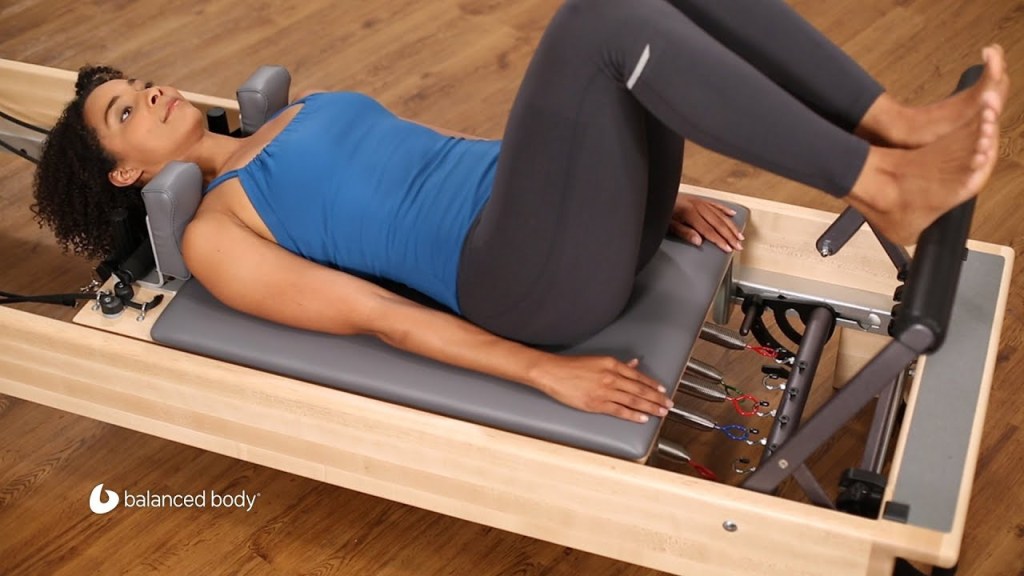
A lot of people conflate yoga with Pilates – they really aren’t the same. Yoga is more about flows and taking your body through a progression of positions. Pilates is more about finding a position and then keeping your core steady and maybe adding movements with the arms and legs. I attend a class that uses a reformer which is a bed-like frame with a flat platform on it, called the carriage, which rolls back and forth on wheels within the frame. The carriage is attached to one end of the reformer by a set of springs. The springs give varying levels of resistance as you push or pull yourself along the frame. That resistance can intensify your workout – and believe me, you get a workout!

A typical reformer – there are also straps used to pull the carriage using either your arms or legs.

Pilates is really helpful in improving flexibility, working on the strength (and tone) of your core, improving your spine stability and really making you aware of how you hold your body. If you find your shoulders creeping up to your ears over the course of the day – Pilates might be for you!

I find it very relaxing. The combination of deep breathing and focused movement has a really amazing impact both physically and mentally – I recommend it wholeheartedly!

There are apps and online resources for classes – try typing Pilates workout into YouTube and you’ll get all kinds of free workout videos. I prefer a class setting to make sure my form is correct – and because I love the reformer. Check your local gym or search “Pilates gym near me” for classes including a reformer. Many gyms offer a free introductory class so you can see if you like it.

Give it a try – your core will thank you!